The Real Budget: What It Actually Costs to Buy a Home in India
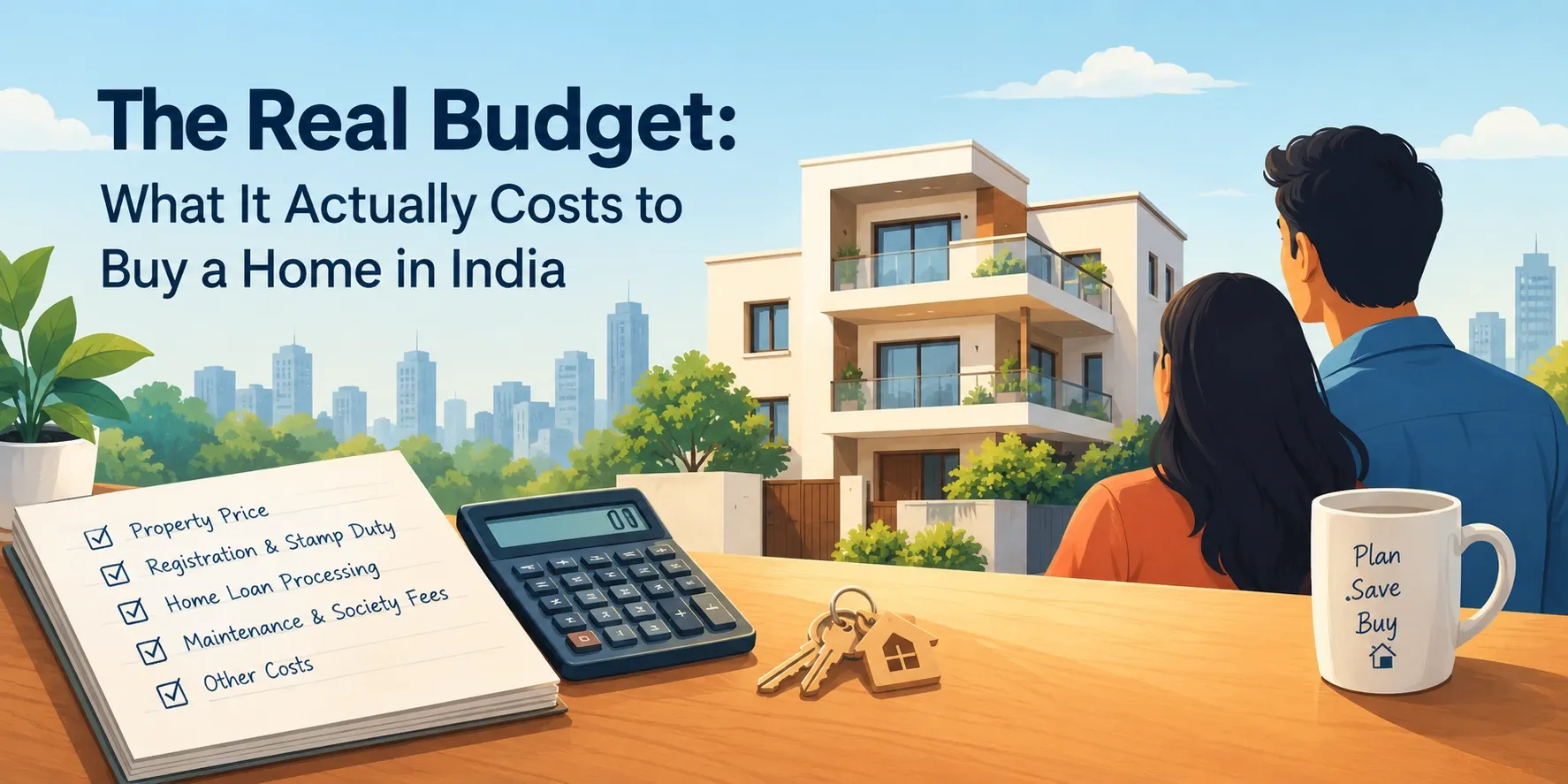
Buying a home is probably the single biggest financial decision most people will ever make. However, in India's real estate market, the sticker price on a listing is just the opening chapter. Between loan eligibility, government fees, and the costs nobody mentions until closing day, a home budget built only around the property price is a budget waiting to break. Here is a fuller picture of what to actually plan for.
At Kaastel, as a leading real estate website in India, we regularly write on value-adding topics that provide useful information to the realtors/sellers and buyers. Let's dive right into the breakdown of how your property costs can slowly add up.
A detailed breakdown of all the costs you need to consider in buying your new home
Start with an honest look at your finances
Before you fall in love with a floor plan, take stock of your income, savings, and existing debts. This is what determines whether the home you are eyeing is genuinely affordable or a stretch that will strain you for the next 20 years. A useful anchor here is the 28% rule: your monthly mortgage payment ideally shouldn't exceed 28% of your gross monthly income, keeping enough breathing room for everyday expenses, emergencies, and other financial goals.
Shop your home loan like you would shop the property
Don't take the first loan offer you are handed. Interest rates, tenure, processing fees, and prepayment terms vary meaningfully across banks and housing finance companies, so compare a few before committing. It is also worth getting pre-approved before you start house-hunting: it tells you your real budget ceiling and makes you a stronger, faster buyer once you find the right place.
Government-backed housing schemes are worth checking too, more so for first-time buyers, since subsidised interest rates and other incentives can meaningfully lower your upfront and monthly costs.
The down payment is only the first cheque
Lenders usually finance a large chunk of the property's value but not all of it. For homes under roughly ₹30 lakh, banks can go up to about 90% loan-to-value, with the ratio tapering down as the property price rises. The rest is your down payment, and financial planners generally recommend building toward at least 20% of the loan amount in savings, since a bigger down payment both improves your loan terms and shrinks your EMI. Try to save at least 20% of the total loan amount as a down payment to secure more favourable loan terms. The smart move is to start this fund two to three years ahead of your planned purchase, splitting savings between recurring deposits for near-term needs and equity funds for a longer runway.
The costs that catch people off guard
This is where budgets usually go wrong. Beyond the loan and down payment, a home purchase in India comes loaded with statutory and transactional costs that lenders don't finance. In other words, they come straight out of your pocket, on top of everything else.
- Stamp duty and registration charges. Stamp duty generally runs 5–7% of a property's market value, with registration charges adding roughly another 1%. These figures vary by state and can easily run into lakhs of rupees on a mid-sized purchase. These charges sit outside your home loan amount entirely, so they have to be paid from your own funds alongside the down payment.
- GST, applicable on under-construction properties, usually in the 1–5% range depending on the category.
- Brokerage and legal fees, generally around 2% of the property value, covering agent commissions, sale deed drafting, and title verification.
- Loan processing fees, usually a small percentage of the loan amount charged upfront by the lender.
Added together, these extras can push total costs to nearly 10% above the property's base price. This unaccounted figure can catch many first-time buyers off guard at the worst possible moment, often right before final payment.
Location isn't just a lifestyle choice
The location of your purchase shapes your budget in ways beyond the price tag. Amenities, connectivity, and planned infrastructure all affect both livability and long-term appreciation, and markets differ enormously in this regard. The calculus for buying in Mumbai looks nothing like buying in Bengaluru or Pune. Spend time researching an area's growth trajectory before you commit, not just its current price per square foot.
Budget for life after the keys are handed over
Ownership doesn't end at registration. Ongoing property taxes, society or maintenance charges, and eventually renovation or furnishing costs are all recurring line items that belong in your monthly budget from day one. Skipping this step is one of the most common ways new homeowners find themselves financially stretched within the first year.
Wrapping up
A realistic home budget has three layers: the loan and down payment, the one-time statutory-transaction costs (stamp duty, registration, GST, legal and brokerage fees), and the ongoing costs of actually living in the home. Build all three into your plan from the start, use an EMI and eligibility calculator early, and give yourself a savings runway of a few years rather than a few months. Do that, and buying a home becomes a well-planned milestone instead of a financial scramble.
In our buy/sell/rent real estate property website, we have a wide array of properties for you to browse. Moreover, you will get comprehensive assistance from us, including cost breakdown, lawyer support, home loan leads and more. Get in touch with Kaastel to begin your property buying journey on the right foothold.
Frequently Asked Questions
1. What percentage of my income should go toward my home loan EMI?
A common guideline is the 28% rule: keeping your monthly mortgage payment under 28% of your gross monthly income so you still have room for other expenses and savings.
2. How much should I save for a down payment?
Aim for at least 20% of the loan amount, though a larger down payment lowers your EMI and can also help you secure better loan terms from lenders.
3. Are stamp duty and registration charges included in my home loan?
No. These are statutory costs paid separately, out of pocket, alongside your down payment: they aren't financed as part of the loan amount.
4. How much are stamp duty and registration charges in India?
Stamp duty typically ranges from 5–7% of the property's market value, and registration charges add roughly another 1%, though exact rates vary by state and city.
5. Do I have to pay GST on my new home?
GST applies mainly to under-construction properties, generally ranging between 1–5% depending on the property category; ready-to-move-in homes are usually exempt.
6. What's the maximum loan-to-value ratio banks offer?
For properties priced under roughly ₹30 lakh, banks can finance up to about 90% of the cost; the maximum LTV ratio decreases as the property value increases.
7. Are there government schemes that can reduce my home-buying costs?
Yes, several central and state schemes offer subsidised interest rates or incentives, particularly for first-time buyers, so it's worth checking your eligibility before finalising a loan.
8. What ongoing costs should I budget for after buying?
Property tax, maintenance or society charges, home insurance, and eventual renovation costs should all be part of your regular monthly budget, not treated as one-off expenses.
9. When should I start saving for a home purchase?
Financial advisors generally recommend starting two to three years before your planned purchase, giving you time to build both your down payment and a cushion for the additional 8–10% in transaction costs.