Location, Location, Location: The Most Important Factor for Choosing Property to Buy
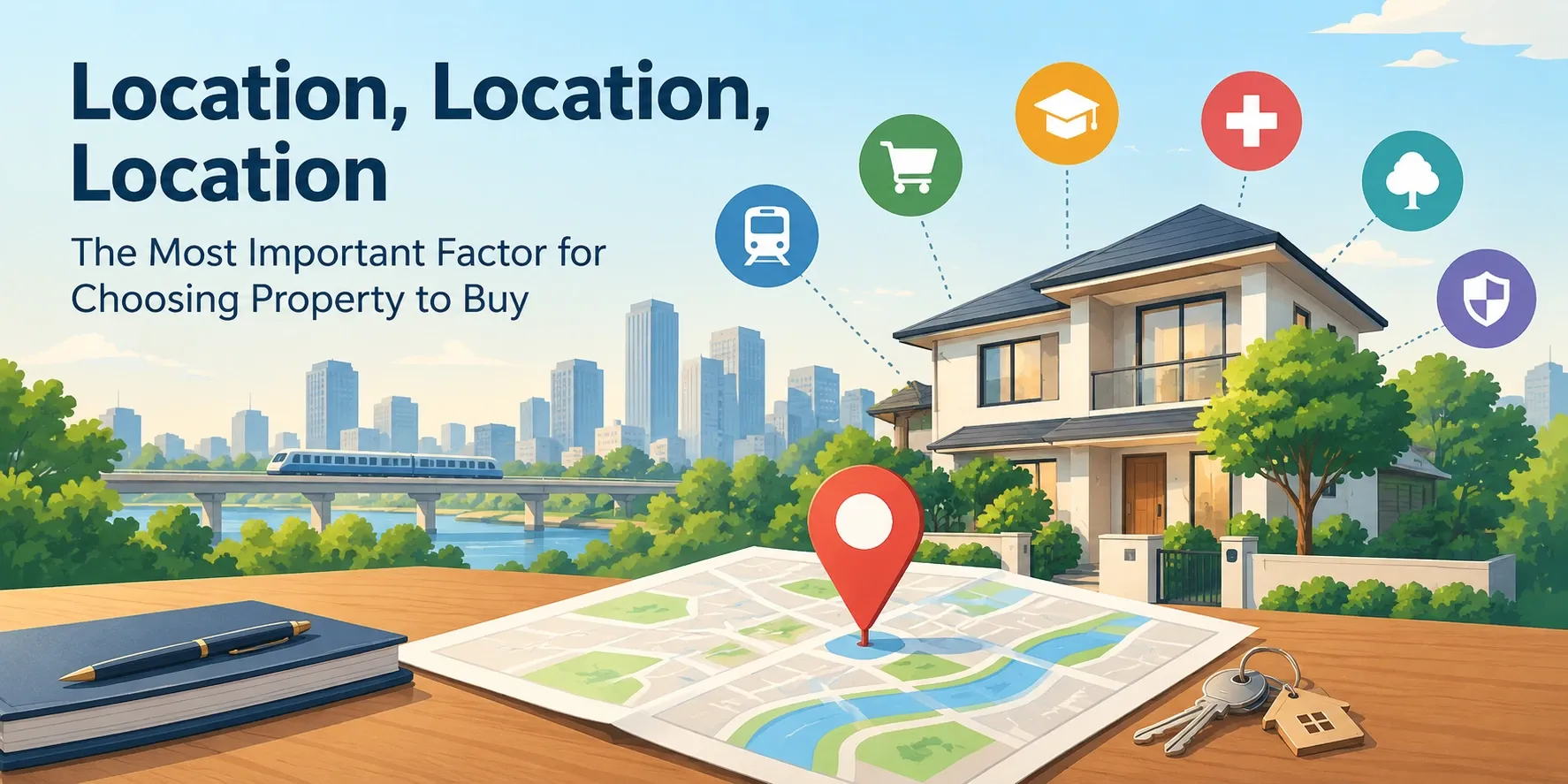
There is a reason the oldest cliché in real estate refuses to die. You can renovate a kitchen, add a bathroom, or repaint every wall in a house, but you can never move it. That single, permanent fact is why location deserves more scrutiny than almost any other part of your home search, and yet it is often the thing buyers evaluate the least carefully, distracted instead by granite countertops or a walk-in closet. Here is a more structured and detailed way to think about it.
Why location outweighs almost everything else
Every renovation is reversible. Location is not. Once you buy into an area, you are tied to that spot's schools, commute times, safety record, and growth trajectory for as long as you own the home. That permanence is exactly why location tends to be the single biggest driver of a property's long-term value. It remains a well known fact that homes in high-demand, limited-supply areas appreciate faster than comparable homes in less desirable ones, regardless of how well-maintained the house itself is. A well-chosen location usually delivers three compounding benefits: faster appreciation, an easier resale when the time comes, and a genuinely better day-to-day quality of life. Here is what our real estate website in India has found most relevant about location from the first hand experience.
Start with access to everyday infrastructure
The most functional test of a location is simple: how far are you from the things you will need every now and then, not just the things you enjoy occasionally? Hospitals, pharmacies, grocery stores, schools, and reliable public transport should all sit within a reasonable radius, particularly if your household includes children or older family members who depend on that access. A location that looks perfect on a real estate listing can become genuinely inconvenient if the nearest hospital is a 30-minute drive away, and that inconvenience compounds every single day you live there.
Don't skip the environmental checklist
This is the category most buyers forget to formally research, mostly because it feels like common sense rather than due diligence. Before committing, look into air and noise pollution levels, the presence of green spaces like parks or community gardens, and whether the area has any history of flooding or other natural hazards. Water reliability matters is also yet another factor to weigh against.
Increasingly, well-planned developments built in rainwater harvesting and other conservation measures specifically to guarantee consistent water supply, which is worth asking about directly if you're evaluating a newer project.
Understand that "Affordable" is a moving target
The heading may sound cryptic. Hence, here follows a clear explanation. A cheap house in an expensive-to-live-in area is not actually cheap. Property taxes, utility costs, and even everyday grocery prices shift meaningfully from one location to another, so the true cost of a home includes the cost of simply existing in that neighborhood. Before you commit, map your expected monthly outgoings against the specific area, not just against the mortgage or EMI figure. A home is only as affordable as the lifestyle it demands of you.
Read the neighborhood
A house is a structure; a neighborhood is a community, and the two need separate evaluations. Look into crime statistics and safety data, and think honestly about whether the surrounding vibe actually matches how you live. No guide can substitute for visiting in person, ideally at different times of day, and talking to people who already live there.
Security is its own line item
Feeling safe at home is not a bonus feature; it is foundational and the most basic aspect of your living condition. You absolutely need good street lighting, visible community vigilance, and, in gated properties, professional security staff who have gone through proper background checks. All these factors can meaningfully affect the daily peace of mind. If you are considering a managed community or township, ask specifically about their security protocols rather than assuming all gated properties offer the same standard.
Weigh community fit, not just convenience
Aside from safety and access, ask whether the area actually offers a sense of belonging. Are there community events, shared spaces, or social clubs that align with how you want to spend your time outside the house? Modern residential developments increasingly build this in deliberately, with shared amenities and organized community programming, because developers have recognized that a strong sense of community measurably improves how residents feel about where they live.
Think ten years ahead, not just today
What a neighborhood looks like right now is not necessarily what it will look like in five or ten years. This trajectory matters enormously for both your lifestyle and your eventual resale value. Hence, you need to research local economic momentum, upcoming infrastructure projects, and job growth in the area before you buy. These are strong early indicators of whether values are likely to climb or stagnate.
Wrapping up
Choosing a location is not necessarily a single decision. It is a layered evaluation across all the abovementioned factors. Get the house wrong and you can fix it over time. Get the location wrong, and you are stuck living with that mistake, or paying to move away from it. Take the time upfront; it is the one part of the purchase you genuinely cannot renovate your way out of.
At Kaastel marketplace, we have a wide array of real estates, houses and apartments in premium locations with a host of amenities. From ready-to-move flats in Kolkata to new residential projects, you can find your kind of property in the preferred locations. We wish you a happy home hunting!
Frequently Asked Questions
1. Why is location considered more important than the house itself?
Because a house can be renovated or upgraded over time, but its location is permanent, and location is usually the single biggest factor driving a property's long-term appreciation and resale value.
2. What public infrastructure should I check before buying in an area?
Look for reasonable proximity to hospitals, schools, pharmacies, grocery stores, and public transport, since easy access to these saves time daily and matters even more if you have children or elderly family members at home.
3. How do I evaluate the environmental quality of a neighborhood?
Check air and noise pollution levels, look for nearby green spaces like parks, and research whether the area has a history of flooding or other natural hazards before committing.
4. Does a cheaper house always mean a more affordable location?
Not necessarily. Property taxes, utility costs, and daily living expenses vary significantly by area, so a lower purchase price can still come with a higher overall cost of living.
5. How can I judge whether a neighborhood is genuinely safe?
Research local crime statistics, look for good street lighting and visible community vigilance, and, where relevant, ask about a development's security protocols and background-check procedures for on-site staff.
6. Why does community fit matter when choosing a location?
Beyond safety and convenience, a neighborhood that matches your lifestyle, whether vibrant and social or quiet and family-focused, meaningfully affects how connected and comfortable you feel in your new home.
7. How much should future development plans influence my decision?
Significantly. Planned infrastructure like new highways, commercial hubs, or major employers can shift property values considerably over five to ten years, so researching an area's growth trajectory is as important as its current state.
8. Should I prioritize resale value even if I plan to stay long-term?
Yes. Circumstances change, and a location with strong appreciation potential and steady buyer demand protects your investment even if you don't plan to sell anytime soon.
9. What's the best way to evaluate a neighborhood beyond online research?
Visit the area in person, ideally at different times of day, and talk to current residents; no guide or listing can fully substitute for experiencing the neighborhood firsthand before you commit.